
Feet are kind of my thing.
I first learned about the whole body connection through foot zone therapy, during the years I was very sick. Foot zoners worked points on my feet that seemed to wake up a healing response everywhere else, and it changed how I understood the body. (You can read that part of my journey in my story.) I've been paying close attention to feet ever since.
I'm endlessly curious about how foot zone therapy can support the body through so many different health concerns. I could talk about that all day (and I will, in another post). But this post is about red light therapy, and a new device I'm honestly in love with.
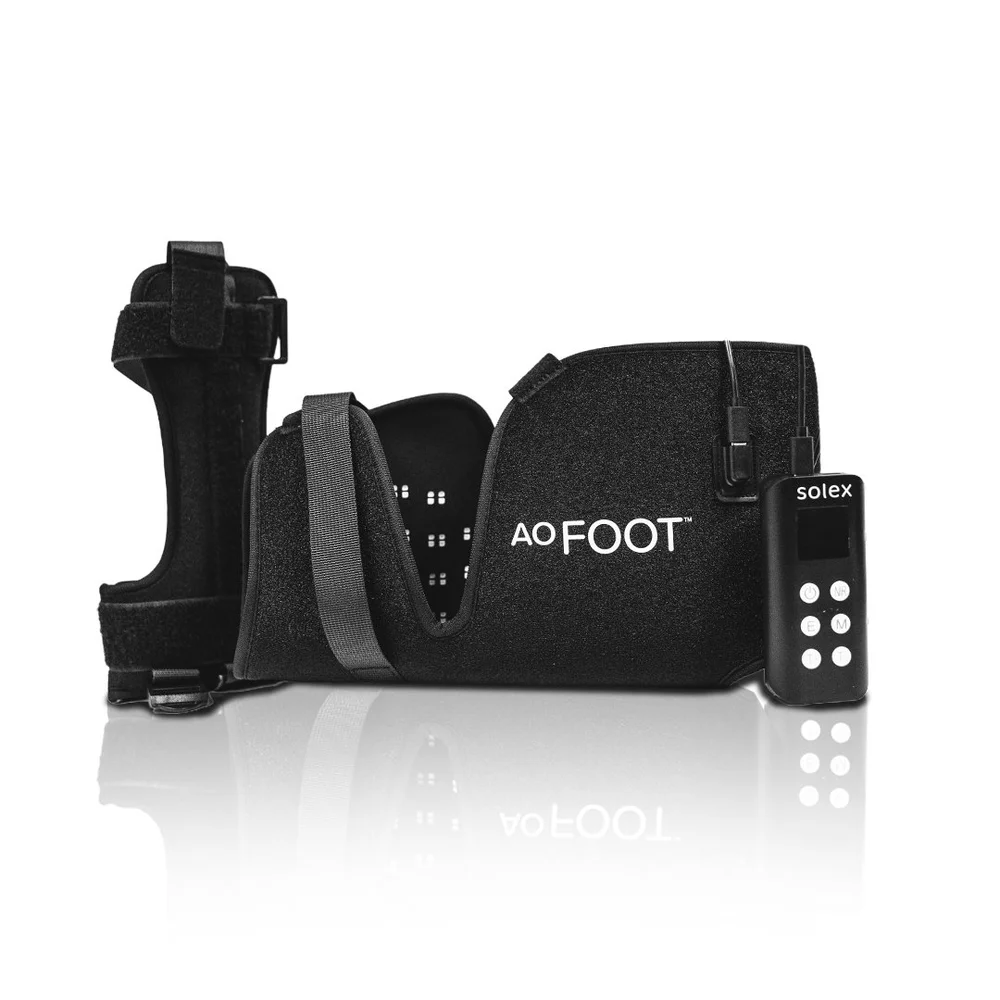
Your feet carry you through every shift, every workout, every school pickup, and every long day. Yet they're usually the last place we think about when it comes to recovery. Red light therapy for feet is a simple way to give them some of the care they've been missing. The AO Foot is the newest device in the Solex light-therapy family, and it's made just for them.
Why your feet deserve their own recovery routine
Each foot has 26 bones, 33 joints, and more than 100 muscles, tendons, and ligaments. They all work together every time you take a step. Add in the plantar fascia under your arch and the Achilles tendon behind your heel, and you have a lot of hardworking tissue in a small space.
Now, as a foot zone practitioner, I see every day how much the feet hold. Tight arches, achy heels, stiff ankles, and dry, rubbed skin are often the body asking for attention. Rest, good shoes, stretching, and hands-on work all help. Light is one more gentle tool you can use at home.
How red light therapy works
Red and near-infrared light therapy is also called photobiomodulation. Specific wavelengths of light are absorbed by the mitochondria, the energy centers inside your cells. Researchers believe this supports how cells make energy (ATP) and how they manage oxidative stress and inflammation (Freitas & Hamblin, 2016).
Different colors of light reach different depths. Blue and green light stay near the surface. Red reaches a little deeper. Near-infrared light, which you can't see, goes deeper still, toward tendons, ligaments, and joints. If you want the full science story, I go deeper in Red Light Therapy: More Than Just an ATP Boost.
What makes the AO Foot different
Most red light devices are panels you stand in front of, or handheld wands you have to aim. The AO Foot is a soft, hands-free wrap that surrounds your whole foot and ankle with light, right against the skin.
I love everything about it: the shape, the soft, contoured design that hugs your foot, and that deep near-infrared reach all the way into the ankle. My only complaint? I'll need two. I have two feet. 🙄
Helps keep foot skin feeling clean and balanced, especially where feet get dry and rub.
Supports calming comfort for tired, achy feet.
Supports everyday heel and arch comfort, circulation, and collagen.
Reaches toward the Achilles, tendons, and ligaments for bounce-back after long days or training.
The deepest reach, toward the ankle joint and connective tissue, supporting joint comfort and mobility.
These statements have not been evaluated by the Food and Drug Administration.
It's rechargeable and wireless, with simple controls for brightness, color, and session time. It uses the same five-wavelength technology as the AO Mask, AO Back, AO Glove, and AO Pet, so if you already have one of those, you'll be right at home. You can see the whole family on my red light devices page.
What the research says (honestly)
Light therapy for foot and heel discomfort has been studied, mostly with low-level lasers rather than LED wraps. The results are encouraging but mixed, and I want you to have the full picture.
A 2022 review of lower-limb tendon problems and plantar fasciitis found that low-level light therapy, used at recommended doses, reduced pain and disability in the short to medium term (Naterstad et al., BMJ Open, 2022).
A 2026 analysis of 13 trials with 784 people with plantar fasciitis found light therapy helped heel tenderness. However, it didn't consistently improve overall pain or function, and the authors suggest using it alongside other care, not as the only approach (Ortiz-Romero et al., J Clin Med, 2026).
Light is a supportive layer, not a replacement for movement, good footwear, hydration, and bodywork.
What about neuropathy?
This is one of the questions I get asked most: "What helps neuropathy?" That burning, tingling, pins-and-needles, or numb feeling in the feet can wear you down, and many people feel like they've run out of options. Here's what we know about how light may fit in, and where the science still has gaps.
Nerves are energy-hungry. Nerve cells need a steady supply of energy (ATP) to carry signals, maintain their protective coating (myelin), and repair themselves. The longest nerves in the body run all the way to your feet, which is one reason the feet are often where neuropathy shows up first. Red and near-infrared light are absorbed by the mitochondria, so supporting cellular energy is one proposed way light may help stressed nerves.
Nerves need blood flow. Nerves are fed by tiny blood vessels of their own. When circulation to the feet is poor, as it often is with blood sugar problems, nerves can go short on oxygen and nutrients. Light therapy is linked to the release of nitric oxide, which helps small blood vessels relax and widen. In one study, 830 nm near-infrared light increased microcirculation by about 54% in the 20 minutes after treatment, though people varied (Lasers Surg Med study). For whole-body circulation support, I also wear the 660 Band on my wrist every day.
Calming inflammation and oxidative stress. Ongoing inflammation and oxidative stress both damage nerves over time. Light appears to send a brief, modest signal that helps cells rebalance their defenses. Animal studies have shown changes in inflammation, myelin, and nerve function after light therapy, which is promising groundwork, but not yet proof in people.
What human studies show so far. In a 2025 trial of 200 people with diabetic neuropathy, red light (632.8 nm) applied to the tops and soles of the feet for 10 days improved vibration perception, protective sensation, pain, and quality-of-life scores compared with placebo (Anju et al., 2025). In a separate double-blind trial of people with chemotherapy-related neuropathy, severity dropped about 52% by week 8 in the light group, while the placebo group stayed about the same (Argenta et al., 2017). These studies used specific devices and doses, so their results don't automatically carry over to any single home device.
Chemotherapy-related neuropathy · double-blind trial
52% less severe
Neuropathy severity at 8 weeks in the light therapy group. The placebo group barely changed. (Argenta et al., 2017)
I break down these studies, and what they did and didn't find, in the nerve section of Red Light Therapy: More Than Just an ATP Boost.
How to use it
- Clean and dryWash and dry your feet so the light reaches bare skin.
- Slide it onToes first, until your heel sits in the back of the wrap.
- Secure itUse the straps so it hugs your foot without shifting.
- RelaxSit back with your foot supported for 20–30 minutes.
Use it once or twice a day, but no more than twice a day on the same foot. It's especially nice after a long day standing or after a workout. Don't use it over open wounds or numb areas without guidance from your provider. If you're pregnant or managing a medical condition, check with your healthcare provider first.
I love pairing a session with a few slow breaths, or right after a foot soak. It's a small daily ritual that tells your nervous system it's safe to slow down.
Light + touch: bring the whole-body map home
Light supports the tissue in your feet. Touch does something different. Your feet hold a map of the whole body, and working that map is how foot zoning and reflexology send a calming, organizing signal to every system. That's the part that changed everything for me.
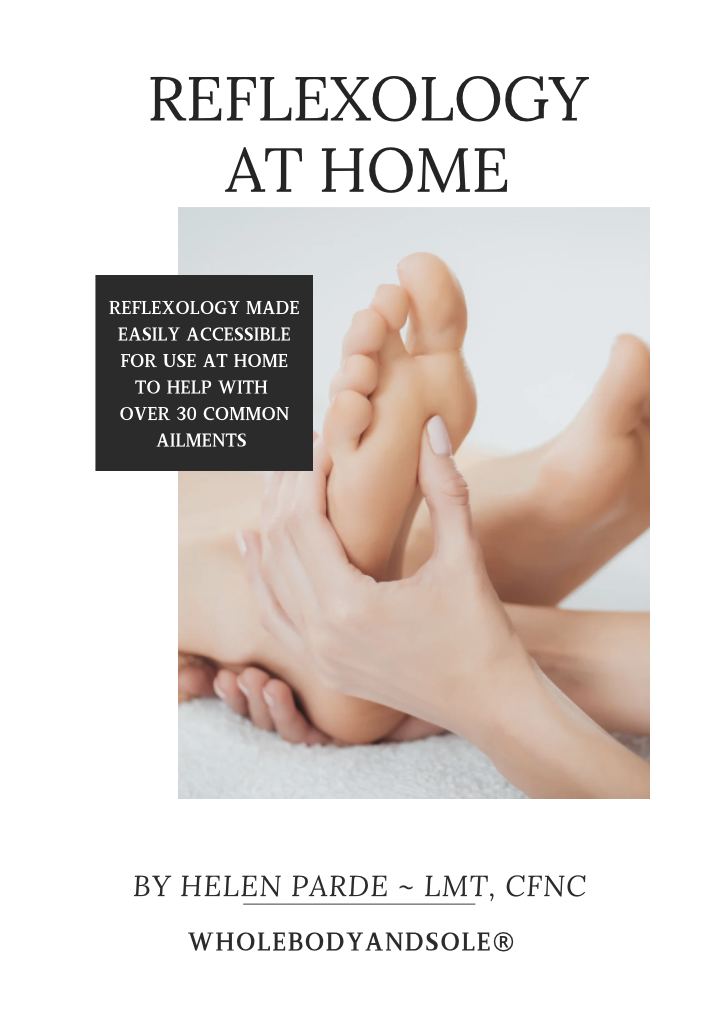
You don't need to be a practitioner to use it. I created Reflexology at Home so you can support yourself and your family between sessions. It includes easy-to-follow charts, demonstration videos, and reflexology techniques for more than 30 common concerns, like digestion, sleep, stress, and hormonal balance. No experience needed.
Reflexology at Home
Try this simple routine: a short reflexology sequence, then 20 minutes in the AO Foot while you rest. Touch first, then light.
Explore the Course Or try a $1 sample firstWhere to get the AO Foot
The AO Foot is sold through Solex distributors, and I'm one of them. If you'd like to experience what light and frequency can do before you buy, a Foot Zone session or an AO Scan with me is a great place to start.
Affiliate disclosure: I'm an independent Solex distributor. If you purchase through my link, I may earn a commission at no extra cost to you. I only share tools I trust.
Written by Helen Parde, LMT — owner of Whole Body and Sole in Herriman & South Jordan, Utah. Licensed massage therapist, foot zone practitioner, nervous system health coach, and Functional Genomics Testing specialist.